Archive for October 16th, 2008
Understanding Media Reading Response
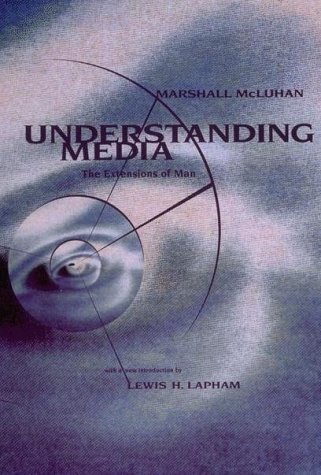
The medium is the message
In this chapter he introduces the concept of Electronic technology and the
difference between hot and cool medium.
Electronic technologies are new concepts that are emerging constantly. The
text introduces us to how these new ideas are in constant change, adjusting
with a society’s overload of information.
The author also mentions how this affects technology, senses, rations and
patterns. In order to explain this, he quotes Professor J.U Nef “the total
wars of our time have been the result of a series of intellectual mistakes”.
The effect of electronically technology is at first anxiety, followed by
alarm, resistance and exhaustion.
I agree with the author, when he describes cotton and oil, like radio and
tv, become fixed charges of the community.
The community depends on these means in order to organize and have social patterns and human senses.
In the human senses, all media are extensions like tv video radio, computer,
etc; this extension changes the perception of societies and their way of
thinking.
As I stated before, McLuhan identifies two types of media: hot media and
cool media. It refers to the degree of participation. A good example of hot
medium is the radio, which is also described as high definition medium . He
describes speech as an example of cool medium of low definitions because so
little is given and so much has to be filled in by the listener
RGB video meter


source code:
// Lina Maria Giraldo
// homework week 7 based on example 16.1 15.7 17.1
// http://www.linamariagiraldo.com

// Declare PFont variable
PFont f;

// Step 1. Import the video library
import processing.video.*;

// Step 2. Declare a Capture object
Capture video;

void setup() {
  size(320,240);
  smooth();

  // Step 3. Initialize Capture object via Constructor
  // video is 320 x 240, @15 fps
  video = new Capture(this,320,240,15);

  //Load Font
  f = loadFont( "font.vlw" );
}

void draw() {

  // Check to see if a new frame is available
  if (video.available()) {
    // If so, Step 4. Read the image from the camera.
    video.read();
  }

  // Display the video image.
  image(video,0,0);

  int loc = (width/2)+((height/2)*width);//find the pixel in the middle of the scree
  video.loadPixels();//we can modifie the pixels
  float r = red (video.pixels [loc]);//find the values of red green and blue
  float g = green (video.pixels [loc]);
  float b =blue(video.pixels [loc]);

  textFont(f,32); // Specify font to be used
  fill(255,0,0);        //Specify font colora
   text ( "R=" + r ,10,40);   //  Display Text
  fill(0,255,0);        //Specify font color
   text ( "G="+ g ,10,100);   //  Display Text
fill(0,0,255);        //Specify font color
   text ( "B="+ b ,10,160);   //  Display Text

 noFill();
stroke(0);
   ellipse(width/2,height/2,10,10);
stroke(255);
   ellipse(width/2,height/2,13,13);

}
ICM Midterm proposal – v1.0

For my midterm proposal I would like to explore video and text. It is my goal to merge two live feeds, one video and text.I would like to work with the live footage of the cameras in the border of Mexico with the US and mix it with an xml from economic figures
Don Quijote

Click on the image
Rain
Moving Rain

click to create win
Growing Rain

click to make more raindrops
Disappear Rain

Click on the image