Archive for the ‘Thesis’ Category
Thesis Midterm Presentation
Thesis Proposal- Why?
h.m.v
An interactive organic visualization tool that describes the progress of AIDS/HIV and Malaria, compared to the world history from a social economical point of view.
Introduction
Sicknesses like HIV and Malaria are very common in developing countries especially those in tropical climates. It kills millions each year and sets back progress in these regions. This is why I want to work on this issue for my thesis. I believe it is a problem too big to be ignored and there is still much awareness that needs to be created. For many years, I have worked on social issues through Art and it is only logical that this be the culmination of my Master’s degree. Throughout my work, I have always chosen regionalized social issues such as immigration and worked towards a more globalized point of view. This time though, I will be starting from a global perspective and working my way down to the specifics of the diseases in each region.
Why?
As conclusion for the last two years of hard work, it’s time to finish and do my thesis. A very big word, thesis…this is when the question “why?” appears. This is a question that is really upsetting me. I knew I really wanted to be working with visuals, play with color, experiment new techniques and tell stories. Sometimes the topics I choose are not the most uplifting. I’ve always been inspired by social issues, like unequal rights, language challenges, immigration, fumigation of illegal crops and drug consumption to name a few. So the fact that I can play with a screen, collecting data and do a visualization, fascinates me. It seemed very far at first considering my programming skills, but the fact of taking the risk and intuition, (which at first was not too clear) filled me with courage and curiosity.
In a few words, I know how much I wanted to do this visualization and seem to be the right path for me, now there must be a strong social reason. My problem at the beginning was there were too many reasons.
The overlapping of facts in mankind fascinates me like education, wars and wealth interlace with health and how they define our path and development. I’d like to recreate the history of AIDS/HIV and Malaria from the last ten years I would like to see the evolution from a social point of view. Are the governments democratic? Are they involved in any kind of war? What are the levels of education?
As a goal I would like to find a common point between the social issues that are behind the problems of AIDS and malaria and economical/political circumstances that are happening in the countries most affected by these diseases. By searching for the visual correlation of these elements, I want to find a different way to explore the political boundaries to preventing their transmission.
User Scenario
Connect each person (or every 1000) with a particle in a system and have then affected by the disease in the model.
The user will have the option of intervening in the model by changing different aspect like education, type of government and gender. as well as adding elements of positive change like donations, condoms and mosquito nets just to name a few.
I will be approaching it from an aesthetical point of view that will make it interesting not only at the scientific level, but also on a playful and captivating manner.
Screen visualization
When the user comes online or stand if front of the screen, they will be asked which model they want to run: HIV or Malaria. Once the model starts running, the user will first see historical data running against the disease and socioeconomic elements. The model will reach time 0 or today, when the user can begin making changes to the way we can cope with the disease. This will provide the rest of the simulation, along with the expected extrapolation of the socioeconomic data
Blockages Thesis Week 5:
What
I’d like to create a visualization of Aids, Cholera and malaria that describes the world’s history from another point of view. I want to create my view from the world using the most common sickness that attack mankind. I’d like to visualize how fragile the Humankind is.
Details
My goal will be to connect each person with a point and that point will be represented or affected by the disease. Other point will represent the diseases, including malaria, cholera and aids as well as the healthy individuals.
Are they connected with poverty, war, nationality and year?
Blockages:
I would like to represent my point of view, my own vision.
What I’m saying?
I’m representing an organic visualization of disease on the world
What is my inside trying to say?
Who I’m saying this to?
Why I’m exited?
I’m exited about my thesis because:
It involves visual work, which I love. I like it so much that I want to take the challenge of perfecting the use of tools like using processing, social input and data.
What I’m not saying?
…
Words related with my thesis:
Scientific
Awareness
Informative
Movement
Dynamic
Preventive
Contagious
Life-Disease
Illuminating
Global
Minimal
Clean
Clock Ticking
Exercise week 4, Nature of Code
Here is my example using box2d, my final goal is to disappear the red cells as soon as they touch the Disease and a second one where the virus will attach to the white cells. The solution is to create a contact listener so I know the values of the collision and can create functions like destroy and attach. The code is not very easy so I haven’t been able to figure it out, even with the help of Daniel Shiffman.
After I created the world and set the variables I realized that something was missing. I thought to create walls with lines that move with time, and noise. I looked at a lot of videos of cells and processing examples and I found a wonderful example in open processing.
After you mouse clicked the noise function adds massive points into the background. The cells and the disease have problems moving faster but when the toxin is flushed, they bounce between each other graciously again.
I’m exited about better understanding the contact listener function in box2d and experimenting more.
Bellow is the applet
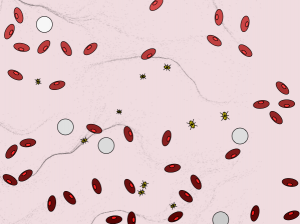
Please click on the image to the applet
Bellow is the video
Disease from Lina Maria Giraldo on Vimeo.
Exercise week 3, Nature of Code
I’m trying to recreate the movement of the bacteria but it’s far from being real. I’m using processing changing the oscillation example from Daniel Shiffman. The video turned out to be sort of old-school with the pixelation.
Assignment:
Incorporate oscillatory motion into a previous assignment (or create a new one)
Create a moving body with a shape made from oscillating parts
Here is the link to the applets:
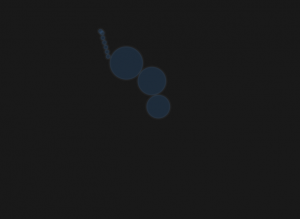
Click on the image to the applet
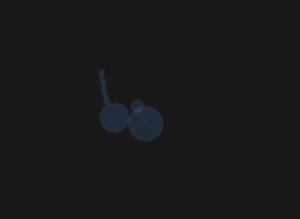
Click on the image to the applet
3rd Presentation Thesis /Timeline

Click on the image to see detailed timeline
2n Presentation Thesis Mood/Board
I’m writing about my thesis idea and finally it’s more realistic. Three months to develop a new project is quite difficult and challenging. Many people have been working on their idea since they started school, but I decided throughout the master take different sets of classes to gain diverse skills to help communities. I took some programming, video and several design classes including solar design and design for Unicef, hoping that they will help me achieve my goal.
My background is as a visual artist and sometimes my solution to solving social issues has been a creative response and not so much a practical one. After working in the most recent project with Latin-American immigrants: “Do you have a dream?”, I realized that I spent most of the time doing managing and administrative stuff like sending emails, phone calls, writing proposals for each school, etc. I got stuck waiting for responses of people or cancellations in the last minute. I understand this is a good part of project development so three months is definitely not the right time frame to develop a social project.
I have this great opportunity to work with Issa Nyaphga and his village in Cameroon. One of the ideas was to work in an educational tool that would help prevent HIV/aids, cholera and malaria. After I showed the presentation to my class, I started working and creating a timeline of tasks and future obstacles that I could encounter. I found myself confined in stress and anxiety because of the amount of work and the short time I have (two months and three weeks). It was irresponsible with the community and myself if I didn’t spend the right time doing the right research. I decided to experiment with the media, visualization and data so I can develop as much as possible and not have limitations of working with a particular community. I usually work from the particular to the universal but at this time I will do the opposite.
I will keep working on AIDS, Malaria and Cholera but using, simulations, visualizations, data and tones of creativity. My goal is in three months to have a visualization that will collect all this data in a fun a creative way in one application.
Bellow is my mood board that might give you an idea of what is the feeling I want to achieve:
2nd thesis presentation mood/inspiration board from Lina Maria Giraldo on Vimeo.
AZUKAR [Thesis Proposal 1st week]
AZUKAR
An interactive visual health learning application for the reduction of Cholera, Malaria, HIV and diarrhea.
Sicknesses like Cholera, HIV and Malaria are very common in developing countries especially those in tropical climates. In many cases, the number of people infected could be reduced or transmission prevented tremendously if they practiced simple things like washing their hands, using condoms or the nightly use of mosquito nets.
A problem specific to the Tikar people in Cameroon is that accurate information regarding reproductive health is almost non-existence. Misinformation about contraception or HIV/Aids leads people to such things as ingesting poisons in attempt to abort and increasing the number of sexually transmitted diseases and death.
The lack of information on healthcare and the vast distances to obtain it, often leads people to use home remedies, instead of medicine in the prevention and treatment of diseases.
I would like to create an interactive interface where the community will learn in an instructive and visual way. This image-based interface will explain the different scenarios of how many people could get affected and how it would spread. To illustrate this, one of the models I would create would be an HIV simulation where you can click on different scenarios. The first one will simulate without the use of condoms and the second will show what would happen if people used condoms. A third variation would include people getting tested for HIV. I believe these simulations will help the community in a fun way to understand how easy diseases could be prevented.
My biggest challenge is to do it in a visual-only way, having in consideration that a large percentage of the people don’t know how to read or write. A visual interface would also solve one of the biggest issues: translation. This visual interface needs to be efficient enough to run on any kind of computer.
I believe this approach could be more effective than booklets or flyers because many people who receive these materials do not understand them. In my proposal, the user interface will be simple enough to understand the different scenarios, my goal is to give the opportunity to the community to learn in a fun way at the same time provides them with a better sense of reality.
I would like to pilot the project in Cameroon, but I believe this could be applicable in any other developing country. An important aspect that supports this idea, is that there are projects that are already happening like one laptop per child, the Clinton foundation, Computer Aid International and smaller NGO’s who are striving to bring this awareness and resources to the communities. This project then comes in to provide all of these organizations with a support application for their core
In a few words:
What
I am developing a project that provides visualization applications to help understand different scenarios of the most prevalent preventable diseases.
Why
I am doing this project, because I want to help these communities and I want to make a change in developing countries, using the tools and knowledge that I have and that I am comfortable and proficient using.
Where
I will be working with developing communities, who don’t have access to education and are in the process of being provided with cheap and low energy computer access. These countries are mostly located in the tropical regions, where other organizations have already provided computer access.
How and User Scenario
The first pilot will be in Cameron with the Tikar people in Nditam, the closest town to one of their villages. This community will receive computers through an ONG’s working towards education in the region. At the same time there are healthcare awareness programs that although active for some time, have not had support of technology to bring their points across. The application will allow them to bring their message across in a visual manner.
The application will be Open source and operating system independent, meaning it can run on MAC, PC and Linux. It would be ideal that it could be integrated into an existing learning platform like Sugar. Most likely it would be Java based. It will be language independent, making it useful for many different regions.
Additional
[Additionaly, schools that are already equipped with XO laptops, can add this application and students work on their own to build awareness of these diseases and how to control them.]