Exercise week 2, Nature of Code
In this exercise I tried to fix my leaf with pvectors that I created last week. I added an array of 100 elements and I started playing with the noise function, which gave the leaf acceleration from different angles creating a more natural movement.
My goal was to add forces, but I couldn’t make it work as I wanted, I’m sure it will happen in the next few days.
Click in the image for the applet
Here is the video documentation:
Video documentation of exercise week 2 of nature of code from Lina Maria Giraldo on Vimeo.
Here is my second attempt after Daniel Shiffman help me. The leafs now move differently which a huge success based on what it was stock
link to the applet
http://linamariagiraldo.com/noc/week2_b/
and here is the video documentation:
Here is my second try using pVector with noise acceleration from Lina Maria Giraldo on Vimeo.
AZUKAR [Thesis Proposal 1st week]
AZUKAR
An interactive visual health learning application for the reduction of Cholera, Malaria, HIV and diarrhea.
Sicknesses like Cholera, HIV and Malaria are very common in developing countries especially those in tropical climates. In many cases, the number of people infected could be reduced or transmission prevented tremendously if they practiced simple things like washing their hands, using condoms or the nightly use of mosquito nets.
A problem specific to the Tikar people in Cameroon is that accurate information regarding reproductive health is almost non-existence. Misinformation about contraception or HIV/Aids leads people to such things as ingesting poisons in attempt to abort and increasing the number of sexually transmitted diseases and death.
The lack of information on healthcare and the vast distances to obtain it, often leads people to use home remedies, instead of medicine in the prevention and treatment of diseases.
I would like to create an interactive interface where the community will learn in an instructive and visual way. This image-based interface will explain the different scenarios of how many people could get affected and how it would spread. To illustrate this, one of the models I would create would be an HIV simulation where you can click on different scenarios. The first one will simulate without the use of condoms and the second will show what would happen if people used condoms. A third variation would include people getting tested for HIV. I believe these simulations will help the community in a fun way to understand how easy diseases could be prevented.
My biggest challenge is to do it in a visual-only way, having in consideration that a large percentage of the people don’t know how to read or write. A visual interface would also solve one of the biggest issues: translation. This visual interface needs to be efficient enough to run on any kind of computer.
I believe this approach could be more effective than booklets or flyers because many people who receive these materials do not understand them. In my proposal, the user interface will be simple enough to understand the different scenarios, my goal is to give the opportunity to the community to learn in a fun way at the same time provides them with a better sense of reality.
I would like to pilot the project in Cameroon, but I believe this could be applicable in any other developing country. An important aspect that supports this idea, is that there are projects that are already happening like one laptop per child, the Clinton foundation, Computer Aid International and smaller NGO’s who are striving to bring this awareness and resources to the communities. This project then comes in to provide all of these organizations with a support application for their core
In a few words:
What
I am developing a project that provides visualization applications to help understand different scenarios of the most prevalent preventable diseases.
Why
I am doing this project, because I want to help these communities and I want to make a change in developing countries, using the tools and knowledge that I have and that I am comfortable and proficient using.
Where
I will be working with developing communities, who don’t have access to education and are in the process of being provided with cheap and low energy computer access. These countries are mostly located in the tropical regions, where other organizations have already provided computer access.
How and User Scenario
The first pilot will be in Cameron with the Tikar people in Nditam, the closest town to one of their villages. This community will receive computers through an ONG’s working towards education in the region. At the same time there are healthcare awareness programs that although active for some time, have not had support of technology to bring their points across. The application will allow them to bring their message across in a visual manner.
The application will be Open source and operating system independent, meaning it can run on MAC, PC and Linux. It would be ideal that it could be integrated into an existing learning platform like Sugar. Most likely it would be Java based. It will be language independent, making it useful for many different regions.
Additional
[Additionaly, schools that are already equipped with XO laptops, can add this application and students work on their own to build awareness of these diseases and how to control them.]
Nature of Code 1st homework
This is my first homework of nature of code. We have to understand any movement from the nature, use a video as an inspiration and try to recreate it using PVector . The video I took from you tube is a leaf being push for the wind left and right. Sometimes just stop in the air if like somebody is holding it.
This is the video I grab from you tube that demonstrate how the leaf is push by the wind
In my sketch I try to recreate the same but I didn’t happen what I was expecting sometime the leaf got stock depending of the angle that falls.Bellow are the links of my first try using a square and the second link is using the leaf
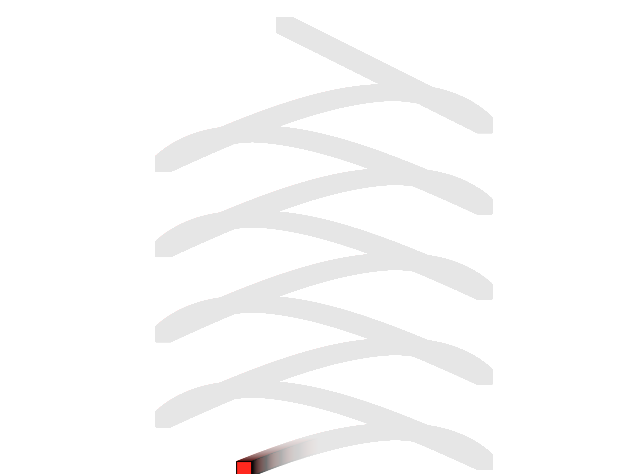
Click in the image for the applet
Please click in the image for the applet
Here is the video of the final Documentation
Nature of Code 1st Homework using PVector from Lina Maria Giraldo on Vimeo.
Documentation Big Screens
Final Presentation The Door
Final Demo Joyn TV
The kingdom (Frame by Frame- final animation)
The Kingdom from Lina Giraldo on Vimeo.
Facts of bottle of water
Presented by Online Education

Text_Storyboard

The kingdom
(1) Once upon at time in an island full of skyscrapers, lived a King and the Queen. They were very happy and they had many plans.
(2) The King and the Queen had 2 children, one was a girl named Stephanie and the boy was called Carlos. They were planning to open their doors and invite many people from others kingdoms.
(3) It was going to be the first time in history that they would have a world without borders.
(4) The festivities started, parties everywhere, fireworks on the sky.
(5) The kingdom’s workers were full of expectations. They hadn’t seen their families for many years.
(6) For some, they have never seen their children grow up, like Jose. He left his country because he received a death threat.
(7) His son Juan was already 23.
(8) It had been almost 16 years for him, working 3 jobs for the King non stop 24 hours with no sleep and cold in the endless nights of winter.
(9) The news spread very quickly outside the kingdom.
(10) The outsiders were packing, getting ready; happiness was all over the world.
(11) The next day on a muggy and gray morning, Stephanie II and Carlos were complaining of their dresses, so the king decided to take them to the tailor at the other side of the island.
(12) Queen Stephanie decided to stay in the palace to make sure the last details of the food were ready.
(13) It was almost 9:00 in the morning, when a loud sound came from bellow. The Queen was at the last floor of the palace with her worker helping her. Nobody knew what was happening, the windows were trembling and fire came out from the floor. The only thing you could hear was screaming. She couldn’t see, there was smoke all over the place. The Queen tried to escape, but it was impossible.
(14) As a last resource and full of fear and sadness she jumped from the window. She closed her eyes and cried as she was falling….
(15) The kingdom had been attacked, the soldiers were getting ready. The borders were closed, the king and his son were furious and full of hatred. Stephanie was crying non-stop. They started searching every corner. The soldiers started detaining people with no questions; if you didn’t have identification you were caught and send to the tents on the desert or jails that were 100 floors underground. They attacked their neighbors.
(16) The king and his son were blinded by fury and his daughter decided to run away. She was even afraid of her own family.
(17) Jose, one of the workers was desperately looking for his son. He didn’t know where he was. His son was on his way to meet his father, he had been traveling for many days and the last time they spoke was before the attack. Jose knew it was a long trip; Juan had to take the train, walk into the desert, fight the extremely hot temperatures during the day and very cold during the night; he even had to swim the river. He was worried that he didn’t have his papers ready. Jose was expecting the worst.
(18) In the other side of the kingdom Stephanie was walking very confused, without a path. She didn’t want to come back to her family
(19) One day she met Juan on the streets. He had been hiding in the streets trying to find his father, before the soldiers found him. He helped Stephanie, who hadn’t eaten for days and was weak and filthy. Juan had recognized her right way and he knew she was the Kings daughter. she tried to hide it, but he knew right away. He allowed her to keep the lie and behaved as if she was any other person.
(20) She slept in the gutters with 6 other people who lived there; she came to know their lives and the stories of their families and pain. She learned to understand the agony of her new friends, desperately looking for relatives. Most had been traveling in the moment of the attack. They all became friends and she decided to stay there, work with them and try to help. One day, Juan and Stephanie woke up to realize they were deeply in love.
The final need to be decided?
The perfect moment
It’s 6:00 am. The beep of the alarm sounds, I’m trying to get out of bed but I’m not ready yet. I’m never ready.
Just one more hour I say!
He just rolls next to me. He talks into my ear and says, why not?
I change the alarm to 7:00 in my useless effort to stop time and stay there forever.
He hugs me like tomorrow doesn’t exist.
I feel his heat in my back his breathing lulls me.
He ‘s very close to me. Our bodies merge and we are in place where time doesn’t exist.